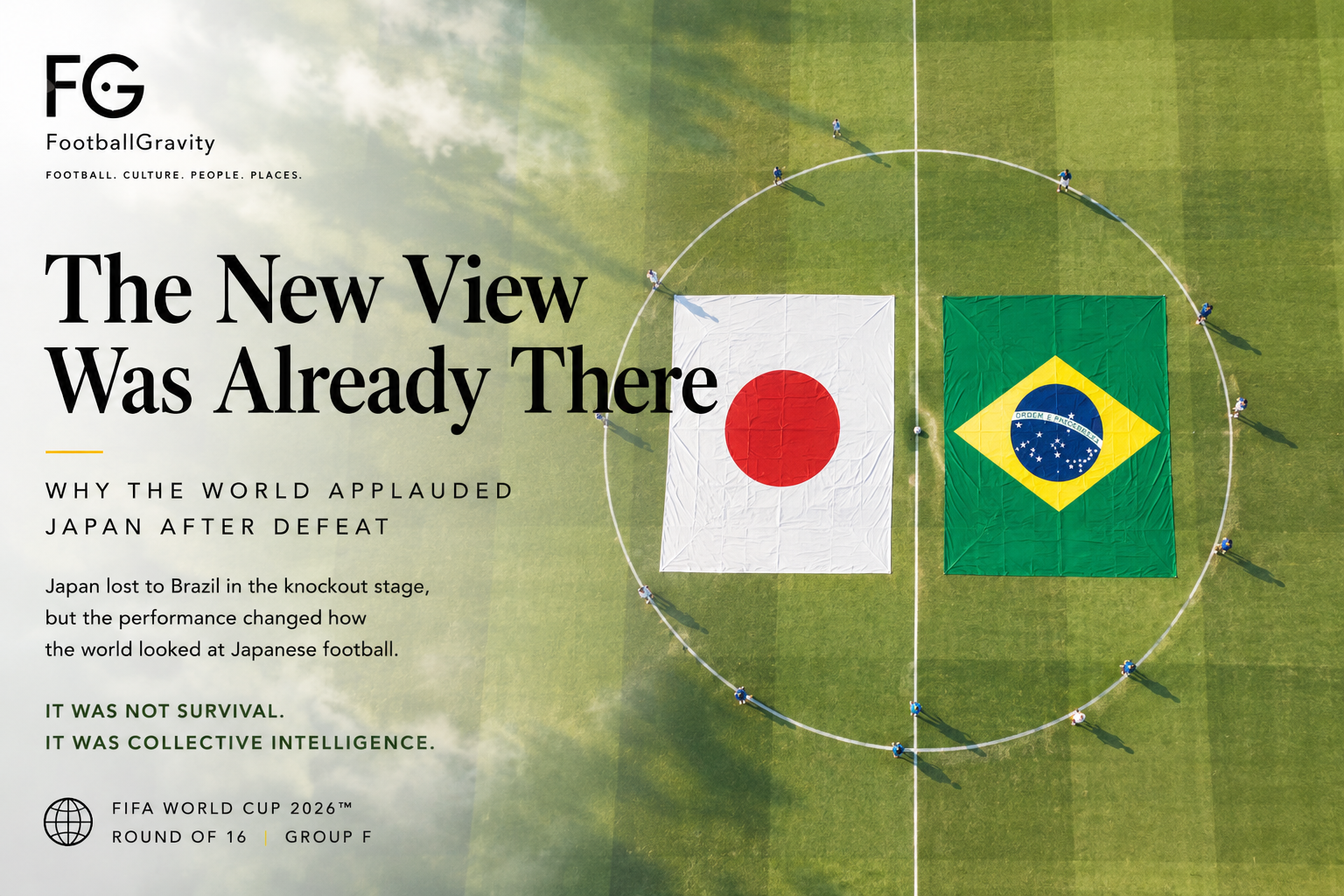
The New View Was Already There

Why the world applauded Japan after defeat

Japan lost.

That is the simplest sentence.

Brazil advanced. Japan went home. Another World Cup knockout match ended without Japan’s first victory beyond the group stage.

And yet, after the final whistle, the conversation did not feel like a simple story of failure.

Around the world, Japan were not spoken of merely as brave losers. They were discussed as a team that had shown something rare: a national side capable of making Brazil look human, not through luck, not through chaos, but through collective intelligence.

That may be why this defeat felt different.

For years, Hajime Moriyasu had spoken about “a new view.”

Perhaps many imagined that view would mean a quarter-final, a semi-final, or even something more ambitious.

Those results did not arrive.

But against Brazil, something else did.

The football world saw Japan differently.

The Cruelest Path

The first knockout round was especially unforgiving for Group F.

Japan faced Brazil.

The Netherlands faced Morocco.

Sweden faced France.

All three teams that advanced from Group F were eliminated.

That does not erase their defeats. But it does change the frame.

Japan did not fall against an ordinary opponent. The Netherlands were pushed out by a Morocco side that looked like one of the most complete teams in the tournament. Sweden were beaten by France, a side whose individual quality and tournament experience remain among the highest in world football.

Group F had produced competitive teams.

But the next path was brutal.

Japan’s loss belonged to that context.

And still, among the three defeated sides, Japan seemed to leave the strongest impression.

Why?

It Was Never Only About the Result

Football usually remembers winners.

Paraguay, for example, achieved something Japan could not: they took Germany to penalties and won. That deserves full respect.

But global admiration does not always follow the scoreboard alone.

Japan were praised because of how they played.

They did not appear to be a team simply waiting for Brazil to make a mistake.

They did not defend as if survival was the only plan.

They defended as if defending itself could be a way of attacking.

That distinction matters.

Japan were not trying only to reach penalties.

They were trying to win.

Against Brazil.

The Mystery the World Wanted to Solve

Japan are no longer an unknown football nation.

The old assumption that European or South American teams could underestimate Japan no longer works.

This is the country that beat Germany and Spain in Qatar. The country that later defeated Germany again. The country that has shown, repeatedly, that its best football belongs on the same pitch as elite opposition.

The question has changed.

It is no longer:

Can Japan compete?

It is now:

Why have Japan become so difficult to play against?

Against Brazil, the answer became clearer.

It was not only technique.

It was not only discipline.

It was synchronisation.

Eleven Players, One Organism

International football usually favours individual quality.

National teams do not train together like clubs. They do not have months to build mechanisms, pressing traps, defensive distances, or shared habits.

That is why knockout football often belongs to individual brilliance.

A winger beats a defender.

A striker finds half a yard.

A midfielder breaks the structure with one pass.

Japan proposed another answer.

Collective movement.

The back line moved together.

The midfield moved together.

The wing-backs adjusted together.

Even the forwards defended as part of the same structure.

At times, Japan looked less like eleven separate players and more like one organism responding to the ball, the space and the opponent at the same time.

That is rare in international football.

And that is what many observers seemed to recognise.

Brazil Did Not Become Ordinary

There is a danger in misreading the match.

Brazil did not suddenly become ordinary.

Japan simply prevented Brazil from looking extraordinary.

That may be the greatest compliment a defensive structure can receive.

The best attacking teams usually make opponents look reactive. They stretch the pitch, isolate defenders, and create the impression that danger can appear from anywhere.

Against Japan, Brazil were forced to think.

They had to adjust.

They had to suffer.

They had to wait until the final moments.

That was not because Brazil lacked quality.

It was because Japan denied them rhythm.

Not Defensive Football, But Winning Football

Japan’s structure was defensive in shape, but not defensive in spirit.

There is a difference between protecting a score and refusing to play.

Japan did not simply sit low and hope.

They pressed.

They shifted.

They tried to create moments.

They looked for the chance that would turn control into shock.

This is why the performance felt attractive, even without attacking fluency.

Japan’s injuries mattered. Several important attacking options were missing or limited. The final combinations were not always clean.

But the intention was visible.

This was not football designed only to avoid defeat.

It was football designed to find a path to victory against a superior collection of individual talent.

That is why it resonated.

Why Coaches Understand It

Some performances are appreciated first by fans.

Others are understood most deeply by coaches, former players and analysts.

Japan’s performance belonged to the second category.

Anyone can admire a dribble.

Anyone can celebrate a goal.

But collective coordination is harder to see.

It requires watching distances, timing, cover, body orientation and the relationship between players who may never touch the ball.

Against Brazil, Japan showed that a national team can still build something close to club-level collective behaviour.

That is not easy.

It is not accidental.

And it is not simply “hard work.”

It is design.

A New View

Moriyasu’s phrase, “a new view,” will always carry the sadness of unfinished ambition.

Japan wanted more.

The players wanted more.

The supporters wanted more.

A first knockout victory was close enough to touch, and then gone.

But perhaps the phrase does not belong only to the result.

Perhaps a new view can also be the moment when the world looks at Japanese football and no longer sees an outsider.

Not a surprise.

Not a guest.

Not a romantic underdog.

But a serious football nation with its own method, its own intelligence, and its own way of making the game difficult for anyone.

The players saw it.

The coach saw it.

The supporters felt it.

And perhaps, for the first time, the world saw it too.

The new view was already there.

Dallas Files #1

More Than a Stadium

What AT&T Stadium Teaches About the Future of Football

Most stadium reviews begin with seats, food, or atmosphere.

AT&T Stadium deserves a different approach.

After spending an entire matchday there during the FIFA World Cup 2026, one thing became clear:

This is not simply a stadium.

It is an ecosystem.

Before You Even Enter

The experience begins long before the ticket gates.

Instead of surrounding visitors with endless parking lots and concrete roads, the stadium opens into something unexpected.

Wide green spaces.

Walking paths.

Small waterways.

Trees.

Open lawns where families gather and supporters relax before kickoff.

It feels less like approaching a sports venue and more like arriving at a public park.

Supporters naturally slow down.

They walk.

They sit.

They talk.

The World Cup begins well before the referee blows the whistle.

A Festival Rather Than an Entrance

Beyond the security gates, the atmosphere changes again.

Food trucks.

Music.

Outdoor seating.

Large grassy areas.

Fans from different countries eating together under the Texas sun.

Children kicking footballs.

Groups taking photos.

Rather than simply waiting for kickoff, people spend hours enjoying the place itself.

The stadium is not merely a destination.

It is an all-day festival.

That distinction matters.

Great tournaments are remembered not only for ninety minutes of football, but for the experiences surrounding those ninety minutes.

AT&T Stadium understands this perfectly.

Designed Around the Spectator

Inside, the architecture continues to impress.

The most iconic feature is the enormous centre-hung video board, manufactured by Mitsubishi Electric.

Unlike traditional stadiums, where replay screens sit high behind one goal, this display hangs directly above the centre circle.

The difference is surprisingly significant.

Supporters never need to turn completely away from the pitch.

The action, the replays and the atmosphere remain connected.

Rather than interrupting the match experience, the technology becomes part of it.

Combined with the stadium’s powerful sound system, the effect is closer to a live concert than a conventional football match.

Every goal celebration feels immersive.

Every pre-match sequence feels cinematic.

It is entertainment without sacrificing football itself.

Small Details That Matter

The stadium’s scale is extraordinary, yet movement inside rarely feels stressful.

Restrooms remained remarkably accessible.

Food and drink outlets were distributed throughout the concourses.

Even with tens of thousands of spectators, congestion was surprisingly limited.

These details rarely appear in highlight videos.

Yet they shape the overall experience just as much as the match itself.

The best stadiums succeed because thousands of small design decisions quietly disappear into the background.

More Than Home Advantage

For Japan, there may also be a competitive benefit.

Playing two Group F matches in the same stadium means familiarity.

The climate is controlled beneath the roof.

Players become accustomed to the lighting, the pitch, the sightlines and even the rhythm of the venue.

These are subtle advantages, but tournament football is often decided by subtle margins.

A Stadium That Belongs to the City

AT&T Stadium is frequently described as one of the world’s greatest sporting venues.

After spending an entire day there, that reputation feels deserved.

What impressed me most was not its size.

It was the way architecture, public space, football and everyday life blended into one continuous experience.

Many stadiums host matches.

Few become part of the city itself.

Perhaps the future of football is not simply about building bigger stadiums.

Perhaps it is about building better places.

And AT&T Stadium offers a compelling blueprint for what that future might look like.

Reading Group F Through Two Matches

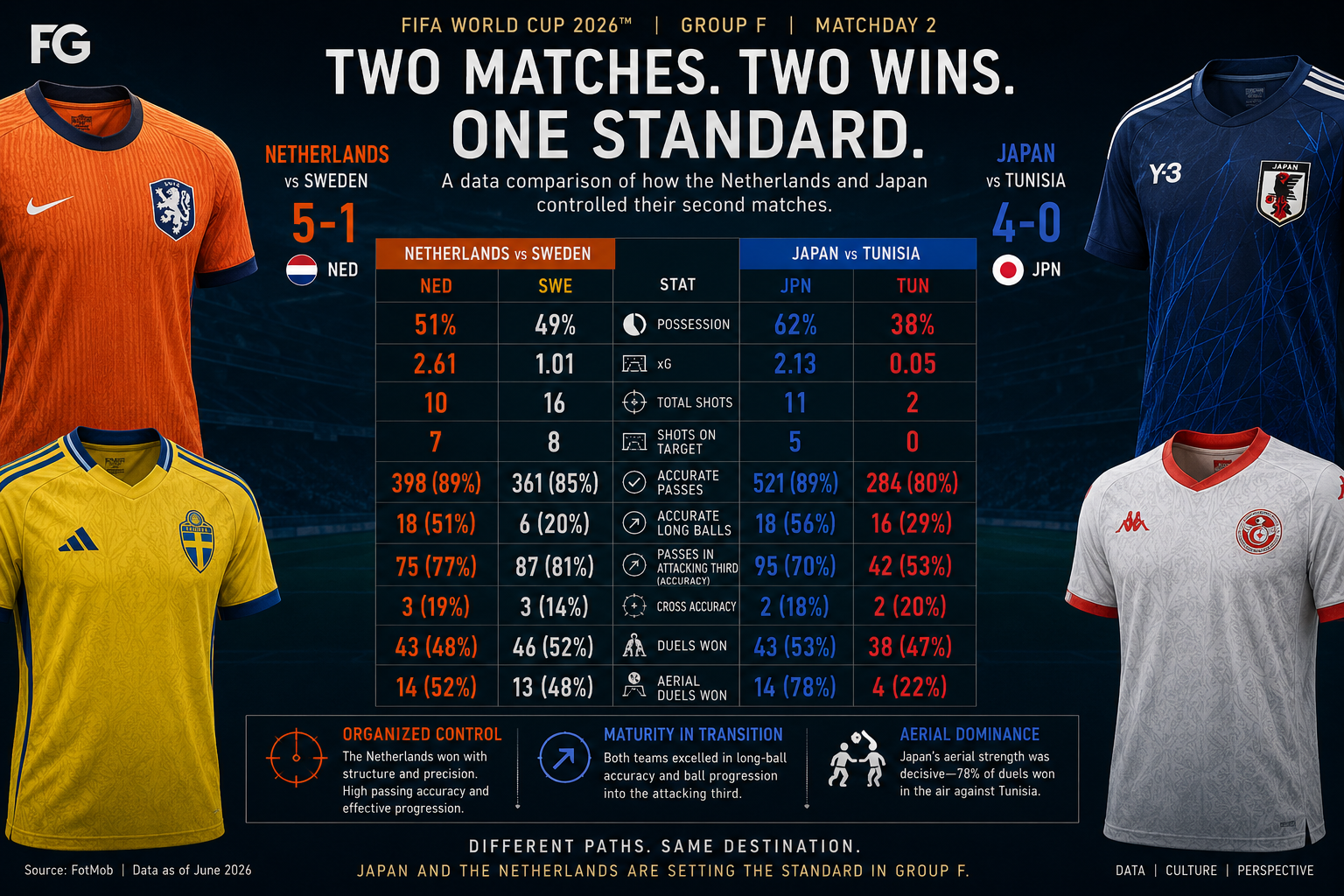
Group F analysis comparing Japan and the Netherlands at the 2026 FIFA World Cup

Not Just Winning, But Controlling

The second round of Group F offered an intriguing comparison.

Japan defeated Tunisia convincingly.
The Netherlands comfortably handled Sweden.

On paper, the results simply reinforced what many observers already suspected: Japan and the Netherlands have emerged as the two strongest teams in the group.

Yet the more interesting story lies beneath the scorelines.

These matches did not merely reveal who won.
They revealed how they won.

And perhaps, they also revealed why the opening 2–2 draw between Japan and the Netherlands now looks even more impressive than it did at the time.

The Myth of Physical Dominance

Football often rewards a simple narrative.

The stronger team wins more duels.
The stronger team runs harder.
The stronger team overwhelms the weaker one physically.

But the statistics from both matches suggest something different.

Japan defeated Tunisia 4–0 while winning only 53 percent of total duels.

The Netherlands beat Sweden 5–1 despite actually losing the overall duel count by a narrow margin.

Yet neither match felt close.

That difference matters.

The strongest teams are not necessarily the teams that win every battle.

They are often the teams that decide where the battles take place.

Japan and the Netherlands consistently placed themselves in situations where they needed fewer desperate actions, fewer emergency tackles, and fewer physical recoveries.

Control is often invisible until it is compared with chaos.

A Shared Strength: Precision in Advanced Areas

One statistic stands out across both teams.

Neither side produced particularly remarkable crossing numbers.

Japan completed just 18 percent of its crosses.
The Netherlands completed 19 percent.

Crosses remain an important weapon, but they were not the primary reason these teams created danger.

Instead, two other categories deserve attention.

First, long-ball accuracy.

Japan completed 56 percent of its accurate long balls.
The Netherlands completed 51 percent.

These numbers are not spectacular on their own, but they become significant when viewed alongside what happened next.

Second, and more importantly, both teams maintained exceptional passing quality in advanced areas.

Japan completed 70 percent of its passes in the attacking third.

The Netherlands recorded 77 percent.

Even Sweden, despite defeat, managed 81 percent.

These are unusually high numbers for the most congested and difficult part of the pitch.

They suggest teams capable not merely of reaching dangerous areas, but of remaining composed once they arrive.

The Netherlands have long been associated with this style. Their football tradition combines patient circulation with the ability to switch play instantly through accurate longer passes.

Japan’s presence in the same conversation is more surprising.

And perhaps more significant.

How Japan Has Changed

For many years, Japan’s strengths were easy to identify.

Technical quality.
Collective movement.
Short passing combinations.

Yet there were also recurring limitations.

Long passes often lacked precision.
Attacking moves frequently stalled in the final third.
Possession could be maintained, but not always converted into danger.

Against Tunisia, signs of evolution were visible.

Japan moved the ball forward more directly when necessary.

Longer passes connected with greater consistency.

Most importantly, combinations in advanced areas survived under pressure.

The result was not simply a victory.

It was evidence of a team that has expanded its toolbox.

A team that can now solve different problems in different ways.

The Air Above the Pitch

One category deserves special mention.

Aerial duels.

Japan won 78 percent of them against Tunisia.

That number is extraordinary at World Cup level.

It is also a reminder of how much Japanese football has changed.

Players such as Tomiyasu, Itakura, and Ito have developed in elite European environments where physical confrontation is unavoidable.

Midfielders such as Sano add another layer of athletic presence.

But this is about more than height.

It reflects a broader shift in the profile of Japanese football.

Technical excellence is no longer arriving alone.

It is increasingly accompanied by physical robustness and tactical maturity.

Why the Netherlands–Japan Draw Looks Different Now

Group F is beginning to resemble a familiar pattern.

Two teams separating themselves from the rest.

Two teams capable of controlling matches through structure rather than emotion.

That context changes how we view the opening match between Japan and the Netherlands.

A 2–2 draw initially looked like an entertaining result.

Now it looks like a meeting between two of the group’s most complete teams.

The statistics from Matchday Two reinforce that impression.

Neither side overwhelmed opponents through individual brilliance alone.

Neither side relied purely on physical superiority.

Instead, both demonstrated something more difficult to build.

The Netherlands controlled Sweden despite near-even possession and a slight deficit in total duels.

Japan controlled Tunisia through overwhelming superiority in possession, passing quality, and aerial dominance.

Different routes.

The same destination.

Collective control.

And in modern tournament football, that may be the most valuable quality of all.

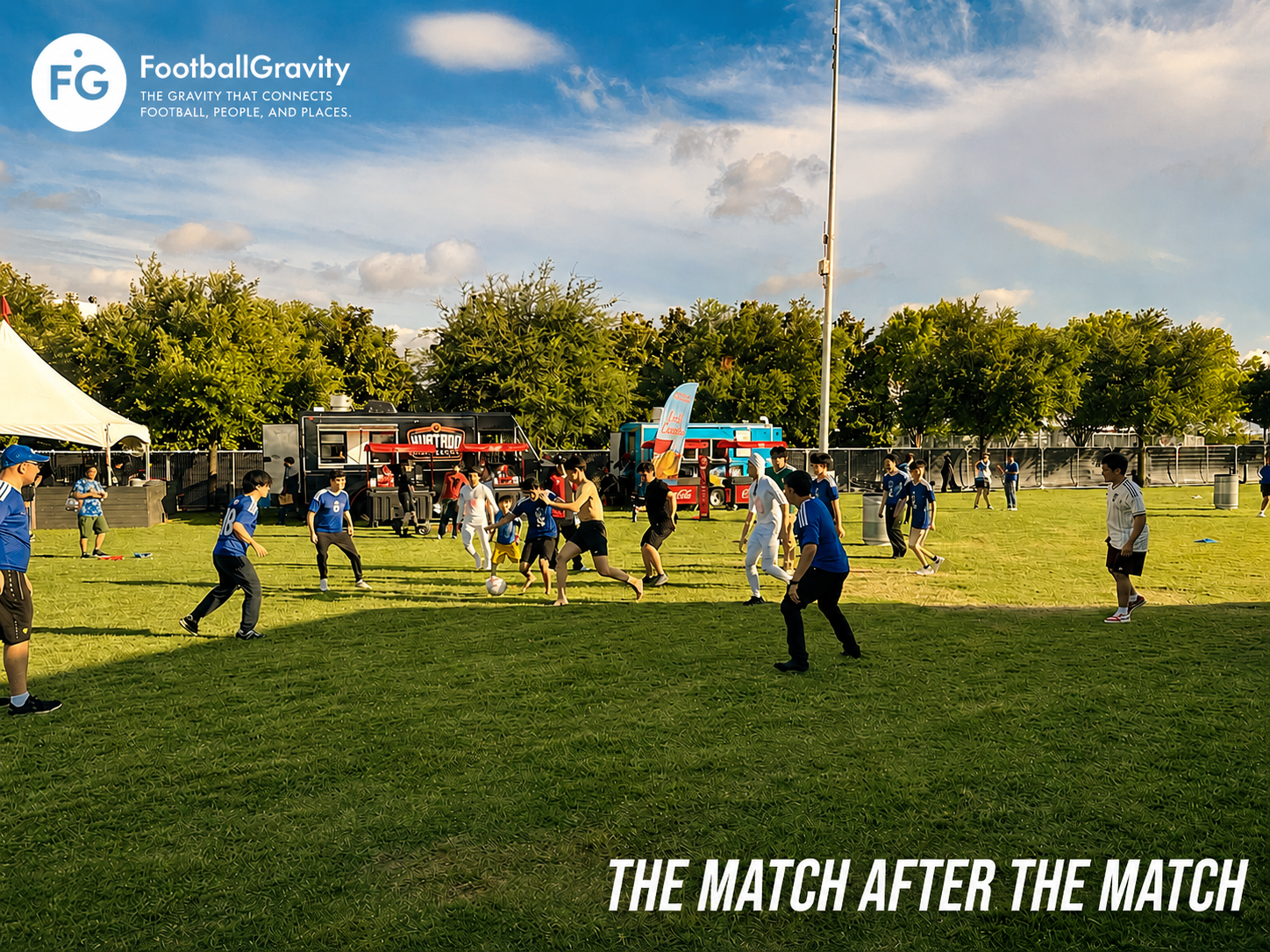
World Cup Extra Time: The Match After the Match

Sometimes the most memorable football of a World Cup is not played inside the stadium.

After Japan and the Netherlands delivered one of the tournament’s most captivating matches, thousands of supporters slowly streamed out into the vast grounds surrounding the stadium in Dallas. The game itself had been excellent. The atmosphere was electric. Most people would have been satisfied to take photos, buy souvenirs, and head home carrying the memories of a thrilling evening.

Instead, something else happened.

A ball appeared.

And football began again.

One Ball, No Rules, No Borders

The match took place not inside the stadium, but in the open supporter zone beyond the gates—a space reserved for ticket holders, filled with food trucks, merchandise stands, bars, and places to relax before and after the game.

There were no referees.

No organized teams.

No official goals.

No registration.

No language requirements.

Just a group of strangers who looked at a football and instinctively understood what to do next.

Within minutes, Japanese supporters, Dutch supporters, Americans, and Mexican fans had become teammates and opponents at the same time. Some wore national-team shirts. Others had simply wandered over after hearing laughter and seeing a crowd gather around the ball.

Names were unknown.

Languages were different.

Football was enough.

The Universal Language

One of football’s great strengths is its simplicity.

You do not need expensive equipment. You do not need a carefully prepared pitch. You do not even need shared words.

A pass communicates intention.

A run communicates possibility.

A raised hand communicates gratitude.

Within a few minutes, everyone understands who likes to dribble, who prefers to pass, who defends aggressively, and who plays with quiet elegance. Football reveals personality remarkably quickly.

Watching the scene unfold in Dallas, it became clear that the sport’s greatest power may not be its professional competitions, but its ability to create instant communities.

The World Cup gathers nations.

A football creates connections.

The Best Match of the Day?

The official match had featured elite athletes, tactical preparation, and global attention.

The unofficial match featured none of those things.

Yet the joy felt remarkably similar.

Many of the participants had spent ninety minutes passionately supporting their countries inside one of the world’s most celebrated stadiums. Moments later, they were chasing the same ball together, laughing at mistakes, applauding good plays, and celebrating goals that nobody would ever record.

There was no scoreboard.

No statistics.

No highlights package.

Only football.

In some ways, it captured the essence of the game more clearly than the professional spectacle that preceded it.

A Stadium Designed for People

This scene was only possible because the environment allowed it.

The stadium precinct offered more than transportation and security. It provided space for people to stay, gather, interact, and create their own experiences.

That is an often-overlooked aspect of football infrastructure.

Great stadiums are not merely places to watch matches. They are places where football culture can emerge organically.

How many major venues around the world would welcome an impromptu multinational kickabout after a World Cup match?

How many would have the space, atmosphere, and sense of trust required for it to happen naturally?

Dallas deserves credit for creating the conditions.

The supporters supplied the rest.

Football Beyond the Final Whistle

The World Cup is often described as a competition between nations.

Yet moments like this suggest something different.

Perhaps the tournament’s greatest achievement is not deciding a champion, but reminding millions of people that they already share something in common.

A ball.

A game.

A language that requires no translation.

Long after the result of Japan versus the Netherlands fades from memory, many supporters may remember a different match—the one played on a patch of grass outside the stadium, among strangers who became teammates for an evening.

That, too, was the World Cup.

Japan 1–0 Iceland: A Useful Warning Before the World Cup

International friendly matches before a World Cup are often difficult to interpret.

Some fans saw Japan’s narrow victory over Iceland as a worrying performance from a World Cup-qualified side. Others simply felt Iceland were stronger and more organized than expected. But the statistics reveal something more interesting: not panic, but a clearer picture of where Japan still needs to improve before the tournament begins.

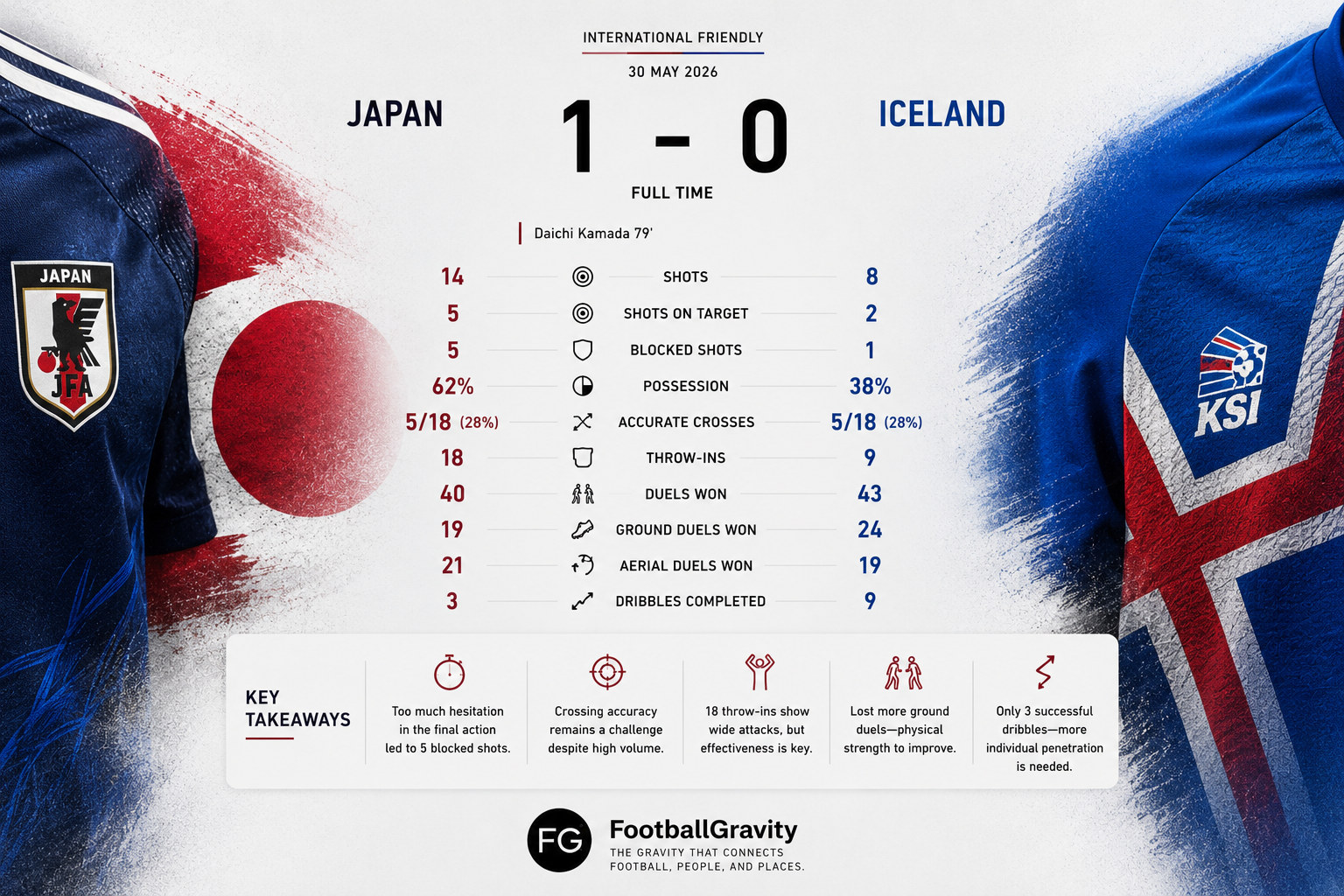
At first glance, Japan controlled many of the game’s core metrics. They recorded more shots, more shots on target, and more possession. Yet despite that territorial advantage, the match rarely felt fully comfortable.

One number stands out immediately: five blocked shots.

That suggests Japan were reaching dangerous areas, but often taking too long to create clean shooting angles or separation inside the box. Against physically compact European defenses, even a fraction of hesitation can be enough for defenders to close space. The issue may not have been chance creation itself, but the speed and sharpness of the final action.

Crossing efficiency also remains an important topic.

Both teams completed five accurate crosses, but Japan required many more attempts to reach that number. A 28% crossing accuracy rate is not disastrous, but at World Cup level, wide attacks often depend on precision rather than volume. Improving timing, positioning, and delivery quality could make Japan’s possession far more dangerous.

Another quietly revealing statistic was throw-ins.

Japan recorded 18 throw-ins — nearly double Iceland’s total. That indicates Japan spent long periods advancing play into wide areas, but it also raises the question of whether those situations were converted into meaningful attacking momentum. Modern football increasingly treats throw-ins as structured attacking phases rather than simple restarts, especially against compact defensive blocks.

Perhaps the most important concern, however, came from the duel numbers.

Japan lost the overall duel battle 40–43, and more notably struggled in ground duels. Interestingly, their aerial duel numbers were relatively competitive, which may surprise many observers given common assumptions about European physical superiority. The larger issue appeared to be second-ball reactions, body positioning, and direct physical resistance in tight spaces.

Dribble success was also limited. Japan completed only three successful dribbles during the match. The absence of Kaoru Mitoma naturally changes the attacking profile of the team, but it also highlighted how heavily Japan sometimes depends on individual progressive carries to destabilize defenses.

Still, this is precisely why matches like this matter before a World Cup.

The performance did not expose fatal weaknesses. Instead, it clarified the margins Japan must sharpen: quicker decision-making near goal, cleaner delivery from wide areas, stronger ground duels, and more individual penetration in transition moments.

The encouraging part is that many of these are adjustable details rather than structural problems.

Japan already showed organization, patience, and enough technical quality to control large portions of the match. What remains is transforming control into efficiency against opponents who are physically disciplined and tactically compact — exactly the type of teams they are likely to face on football’s biggest stage.

In that sense, Iceland may have provided Japan with something more valuable than an easy victory: a realistic reminder of the intensity still waiting at the World Cup.