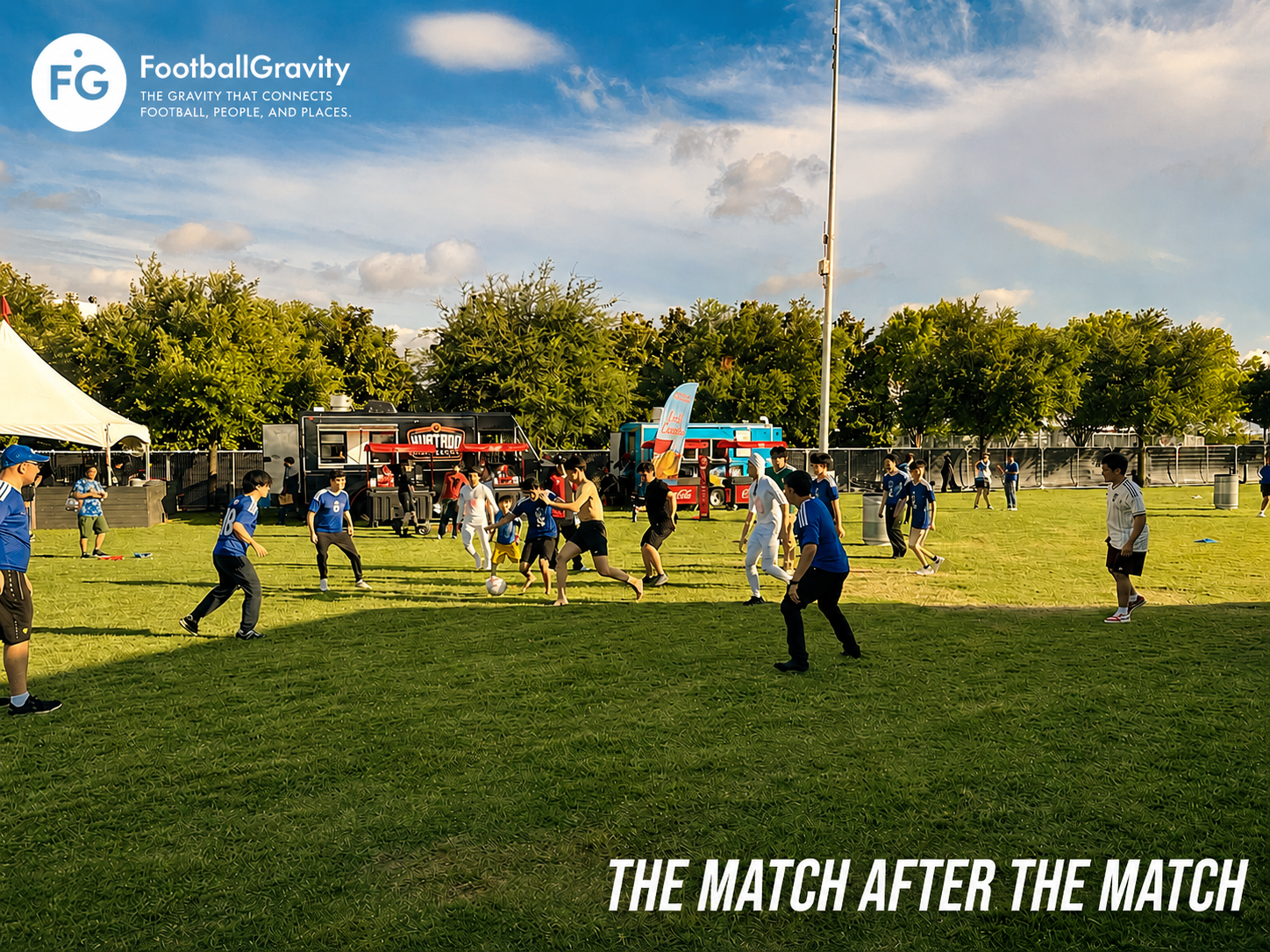
A football does not need much introduction. In its most informal form, a game can begin with a ball, a patch of shared ground and an agreement about where the goals are. The rules are familiar across languages, ages and borders. That accessibility helps explain why FIFA routinely describes football as the world’s most popular sport — and why the game can carry ideas far beyond the touchline.
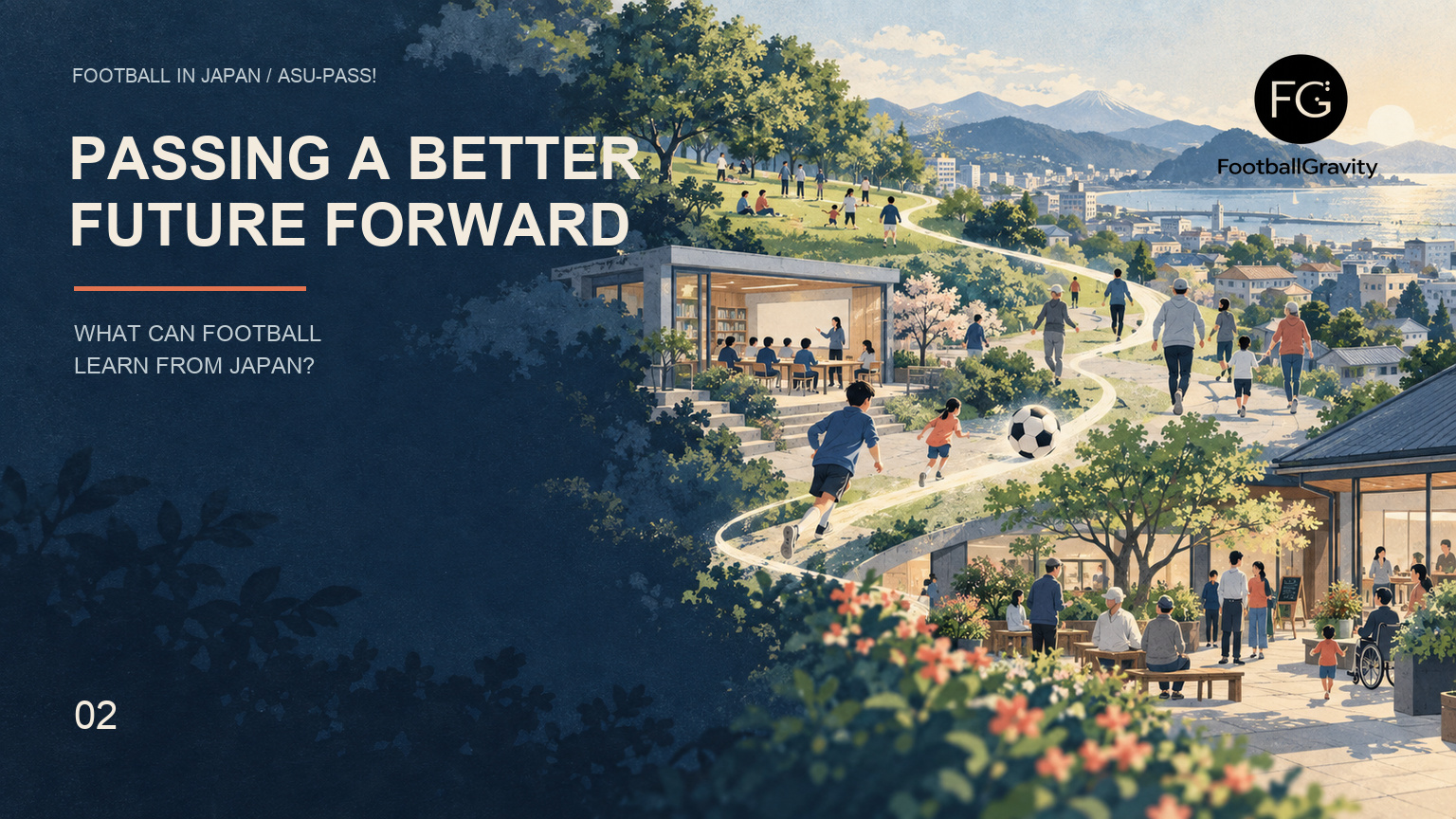
In Japan, the national association is putting that reach behind a broad sustainability programme called ASU-PASS! The name is written アスパス! in Japanese. It brings together Earth, asu — the Japanese word for tomorrow — us, and the footballing act of passing something forward.
The result is more than a slogan attached to one campaign. ASU-PASS! is the Japan Football Association’s shared name for work across five connected areas: environment, human rights, health, education and community. It gives activities that can otherwise look separate a common direction: using football to help create a future in which the game, and the communities around it, can thrive.
A name for the next hundred years
The JFA introduced ASU-PASS! in December 2021, the year of its centenary. Its announcement looked ahead to the association’s next hundred years, while drawing together work that had already been developing for much longer.
That distinction matters. ASU-PASS! did not begin with a blank page. Grassroots football, respect and fair-play education, the JFA Green Project, disaster recovery, children’s learning and women’s leadership were among the activities already in motion. The new framework made it easier to see them as parts of the same responsibility.
Its five areas are deliberately broad. Environment includes climate action, heat safety and reducing waste. Human rights covers the work of building a game free from violence and discrimination, narrowing children’s experience gaps, advancing gender equality and widening access. Health uses grassroots sport to support physical and mental wellbeing across generations. Education includes learning through football and programmes that encourage children to imagine their future. Community connects the game with recovery, disaster preparedness and stronger local relationships.
The categories are useful, but the most interesting work often crosses between them. Protecting players from extreme heat is an environmental and health issue. A welcoming place to play is about health, rights and community at once. A football lesson can become an education project, a meeting point and a first experience of belonging.
Why football can move an idea
The ambitions behind the Sustainable Development Goals are easy to support, yet their scale can make them feel remote from daily life. Climate, equality, health, learning and resilient communities are enormous subjects. People may agree with the destination without knowing where to begin.
Football offers an inviting first step. It has familiar places, shared rituals and networks that already gather people: a school field, a local association, a national-team match, a coaching course, a community club. An idea introduced there arrives through a relationship that already exists.
The JFA’s own sustainability strategy describes two strengths of the game: its power to connect and its power to encourage. ASU-PASS! uses both. It can connect an association with schools, municipalities, companies and civic organisations, then use the visibility and emotion of football to encourage action. In 2025, the JFA also joined the United Nations’ Football for the Goals initiative, placing this Japanese programme within a wider international effort to use football’s reach in support of the SDGs.
The size of the existing network gives that idea practical weight. The JFA works with 47 prefectural associations and nine regional associations, while its 2025 data records more than 836,000 registered football players. Those figures do not include everyone who plays informally, watches, volunteers or supports a family member. They show how many doors football can open before a sustainability conversation has even begun.
Five areas, many ways to take part
The breadth of ASU-PASS! is one of its strengths. A supporter might meet it through recycling or a food drive at a stadium. A coach may encounter it through safeguarding, respect or heat-safety guidance. A child may know it through outdoor play or a Dream Class. A town recovering from disaster may experience football as companionship, fundraising and a reason to gather again.
The JFA’s 2024 Sustainability Report shows this range in practice. It records support following the Noto Peninsula earthquake, learning and exercise programmes for children, work on inclusive participation, community events and a decision to avoid staging JFA-hosted competitions in July and August from 2025 in response to rising heat risk. The report also sets out nine priority themes beneath the five areas, giving the programme a clearer route from a generous ambition to recognisable activity.
That variety gives people more than one way into the programme. Sustainability does not have to begin with specialist vocabulary. It can begin with a safer summer schedule, a shared meal, a child’s first touch of a ball, a conversation about respect or a pitch that brings neighbours together.
A pass invites another pass
ASU-PASS! is still in the early part of the long future imagined at its launch. That is precisely why it is worth following. The framework can become more valuable each time an association, club, school or partner finds a practical way to use it and shares what happened next.
There is room for the programme to grow through simple, generous forms of exchange: practical guides that help local organisers begin, stories that show how one community adapted an idea, and regular reporting that lets participants recognise their work as part of something larger. The five areas provide a map; the people using football in their own places will give that map its detail.
Football is especially suited to this kind of invitation. A pass assumes that someone else is there. It travels, it asks for attention, and it keeps the move alive. ASU-PASS! takes that ordinary action and turns it into a hopeful civic idea: the future is something the football family can move towards together.
This article is part of What can football learn from Japan?, FootballGravity’s continuing series on ideas, communities and experiments in Japanese football.