
Dallas Files #1

More Than a Stadium

What AT&T Stadium Teaches About the Future of Football

Most stadium reviews begin with seats, food, or atmosphere.

AT&T Stadium deserves a different approach.

After spending an entire matchday there during the FIFA World Cup 2026, one thing became clear:

This is not simply a stadium.

It is an ecosystem.

Before You Even Enter

The experience begins long before the ticket gates.

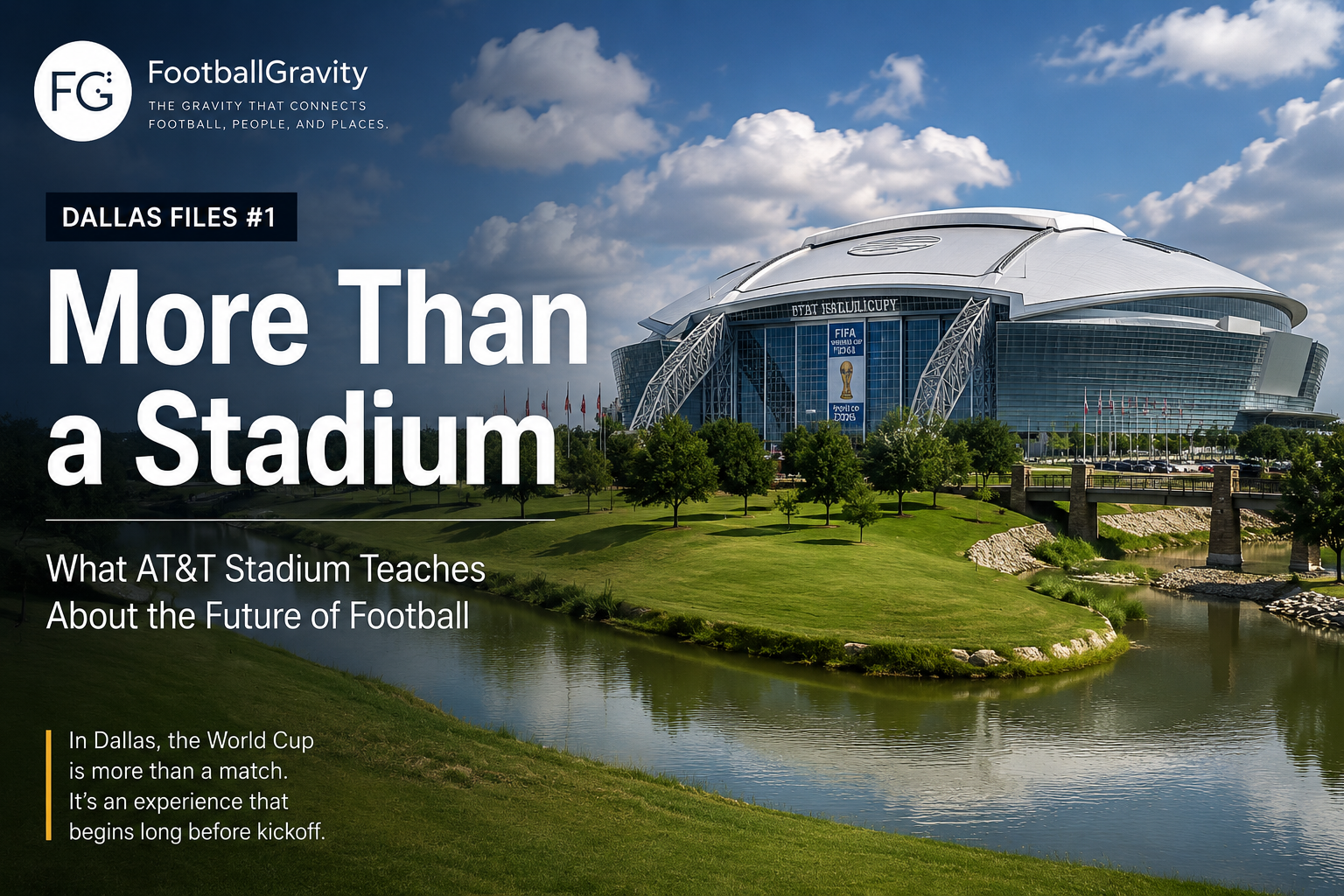
Instead of surrounding visitors with endless parking lots and concrete roads, the stadium opens into something unexpected.

Wide green spaces.

Walking paths.

Small waterways.

Trees.

Open lawns where families gather and supporters relax before kickoff.

It feels less like approaching a sports venue and more like arriving at a public park.

Supporters naturally slow down.

They walk.

They sit.

They talk.

The World Cup begins well before the referee blows the whistle.

A Festival Rather Than an Entrance

Beyond the security gates, the atmosphere changes again.

Food trucks.

Music.

Outdoor seating.

Large grassy areas.

Fans from different countries eating together under the Texas sun.

Children kicking footballs.

Groups taking photos.

Rather than simply waiting for kickoff, people spend hours enjoying the place itself.

The stadium is not merely a destination.

It is an all-day festival.

That distinction matters.

Great tournaments are remembered not only for ninety minutes of football, but for the experiences surrounding those ninety minutes.

AT&T Stadium understands this perfectly.

Designed Around the Spectator

Inside, the architecture continues to impress.

The most iconic feature is the enormous centre-hung video board, manufactured by Mitsubishi Electric.

Unlike traditional stadiums, where replay screens sit high behind one goal, this display hangs directly above the centre circle.

The difference is surprisingly significant.

Supporters never need to turn completely away from the pitch.

The action, the replays and the atmosphere remain connected.

Rather than interrupting the match experience, the technology becomes part of it.

Combined with the stadium’s powerful sound system, the effect is closer to a live concert than a conventional football match.

Every goal celebration feels immersive.

Every pre-match sequence feels cinematic.

It is entertainment without sacrificing football itself.

Small Details That Matter

The stadium’s scale is extraordinary, yet movement inside rarely feels stressful.

Restrooms remained remarkably accessible.

Food and drink outlets were distributed throughout the concourses.

Even with tens of thousands of spectators, congestion was surprisingly limited.

These details rarely appear in highlight videos.

Yet they shape the overall experience just as much as the match itself.

The best stadiums succeed because thousands of small design decisions quietly disappear into the background.

More Than Home Advantage

For Japan, there may also be a competitive benefit.

Playing two Group F matches in the same stadium means familiarity.

The climate is controlled beneath the roof.

Players become accustomed to the lighting, the pitch, the sightlines and even the rhythm of the venue.

These are subtle advantages, but tournament football is often decided by subtle margins.

A Stadium That Belongs to the City

AT&T Stadium is frequently described as one of the world’s greatest sporting venues.

After spending an entire day there, that reputation feels deserved.

What impressed me most was not its size.

It was the way architecture, public space, football and everyday life blended into one continuous experience.

Many stadiums host matches.

Few become part of the city itself.

Perhaps the future of football is not simply about building bigger stadiums.

Perhaps it is about building better places.

And AT&T Stadium offers a compelling blueprint for what that future might look like.
World Cup Extra Time: The Match After the Match

Sometimes the most memorable football of a World Cup is not played inside the stadium.

After Japan and the Netherlands delivered one of the tournament’s most captivating matches, thousands of supporters slowly streamed out into the vast grounds surrounding the stadium in Dallas. The game itself had been excellent. The atmosphere was electric. Most people would have been satisfied to take photos, buy souvenirs, and head home carrying the memories of a thrilling evening.

Instead, something else happened.

A ball appeared.

And football began again.

One Ball, No Rules, No Borders

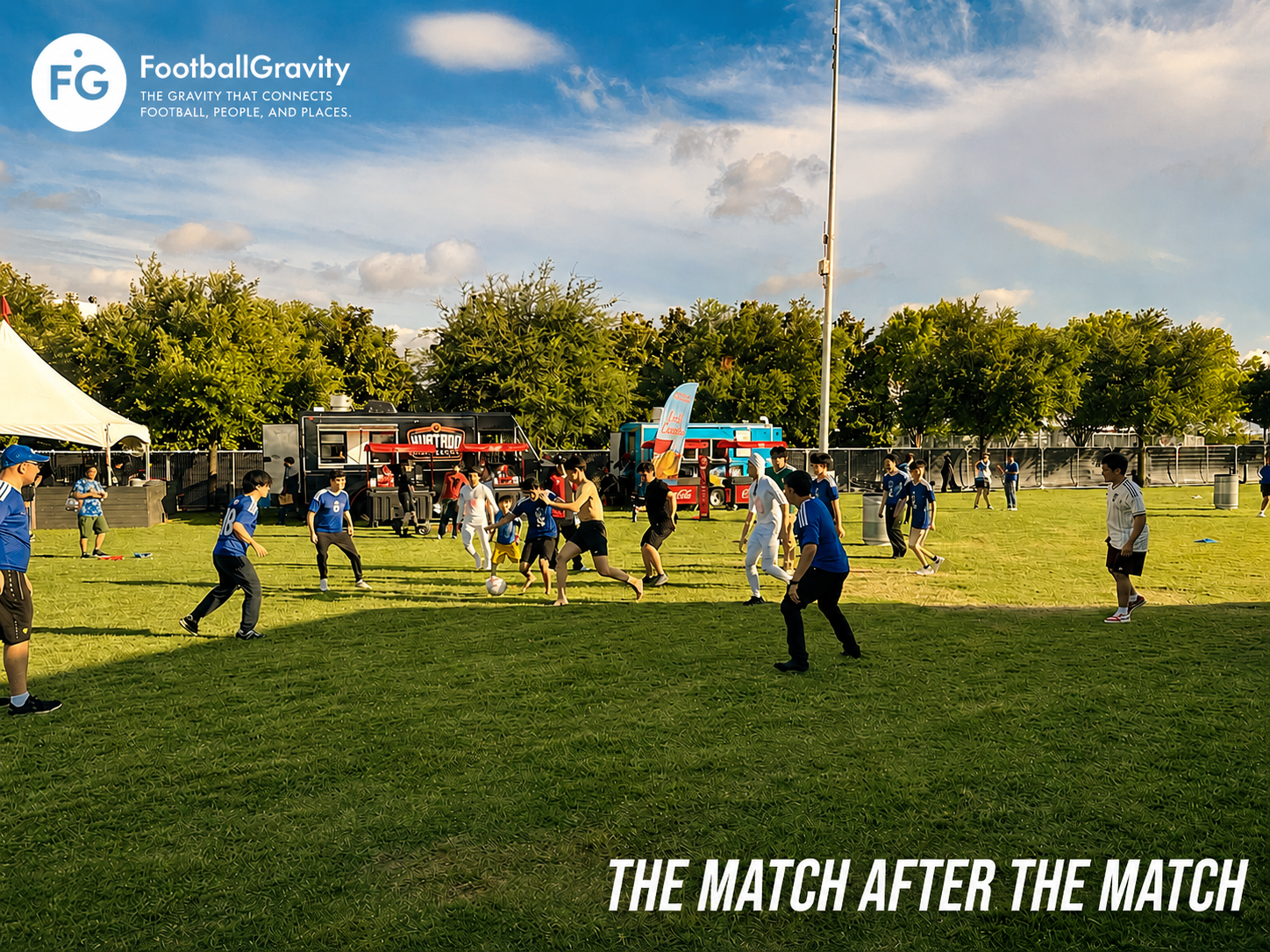
The match took place not inside the stadium, but in the open supporter zone beyond the gates—a space reserved for ticket holders, filled with food trucks, merchandise stands, bars, and places to relax before and after the game.

There were no referees.

No organized teams.

No official goals.

No registration.

No language requirements.

Just a group of strangers who looked at a football and instinctively understood what to do next.

Within minutes, Japanese supporters, Dutch supporters, Americans, and Mexican fans had become teammates and opponents at the same time. Some wore national-team shirts. Others had simply wandered over after hearing laughter and seeing a crowd gather around the ball.

Names were unknown.

Languages were different.

Football was enough.

The Universal Language

One of football’s great strengths is its simplicity.

You do not need expensive equipment. You do not need a carefully prepared pitch. You do not even need shared words.

A pass communicates intention.

A run communicates possibility.

A raised hand communicates gratitude.

Within a few minutes, everyone understands who likes to dribble, who prefers to pass, who defends aggressively, and who plays with quiet elegance. Football reveals personality remarkably quickly.

Watching the scene unfold in Dallas, it became clear that the sport’s greatest power may not be its professional competitions, but its ability to create instant communities.

The World Cup gathers nations.

A football creates connections.

The Best Match of the Day?

The official match had featured elite athletes, tactical preparation, and global attention.

The unofficial match featured none of those things.

Yet the joy felt remarkably similar.

Many of the participants had spent ninety minutes passionately supporting their countries inside one of the world’s most celebrated stadiums. Moments later, they were chasing the same ball together, laughing at mistakes, applauding good plays, and celebrating goals that nobody would ever record.

There was no scoreboard.

No statistics.

No highlights package.

Only football.

In some ways, it captured the essence of the game more clearly than the professional spectacle that preceded it.

A Stadium Designed for People

This scene was only possible because the environment allowed it.

The stadium precinct offered more than transportation and security. It provided space for people to stay, gather, interact, and create their own experiences.

That is an often-overlooked aspect of football infrastructure.

Great stadiums are not merely places to watch matches. They are places where football culture can emerge organically.

How many major venues around the world would welcome an impromptu multinational kickabout after a World Cup match?

How many would have the space, atmosphere, and sense of trust required for it to happen naturally?

Dallas deserves credit for creating the conditions.

The supporters supplied the rest.

Football Beyond the Final Whistle

The World Cup is often described as a competition between nations.

Yet moments like this suggest something different.

Perhaps the tournament’s greatest achievement is not deciding a champion, but reminding millions of people that they already share something in common.

A ball.

A game.

A language that requires no translation.

Long after the result of Japan versus the Netherlands fades from memory, many supporters may remember a different match—the one played on a patch of grass outside the stadium, among strangers who became teammates for an evening.

That, too, was the World Cup.