
More Than a Stadium
What AT&T Stadium Teaches About the Future of Football
Most stadium reviews begin with seats, food, or atmosphere.
AT&T Stadium deserves a different approach.
After spending an entire matchday there during the FIFA World Cup 2026, one thing became clear:
This is not simply a stadium.
It is an ecosystem.
Before You Even Enter
The experience begins long before the ticket gates.
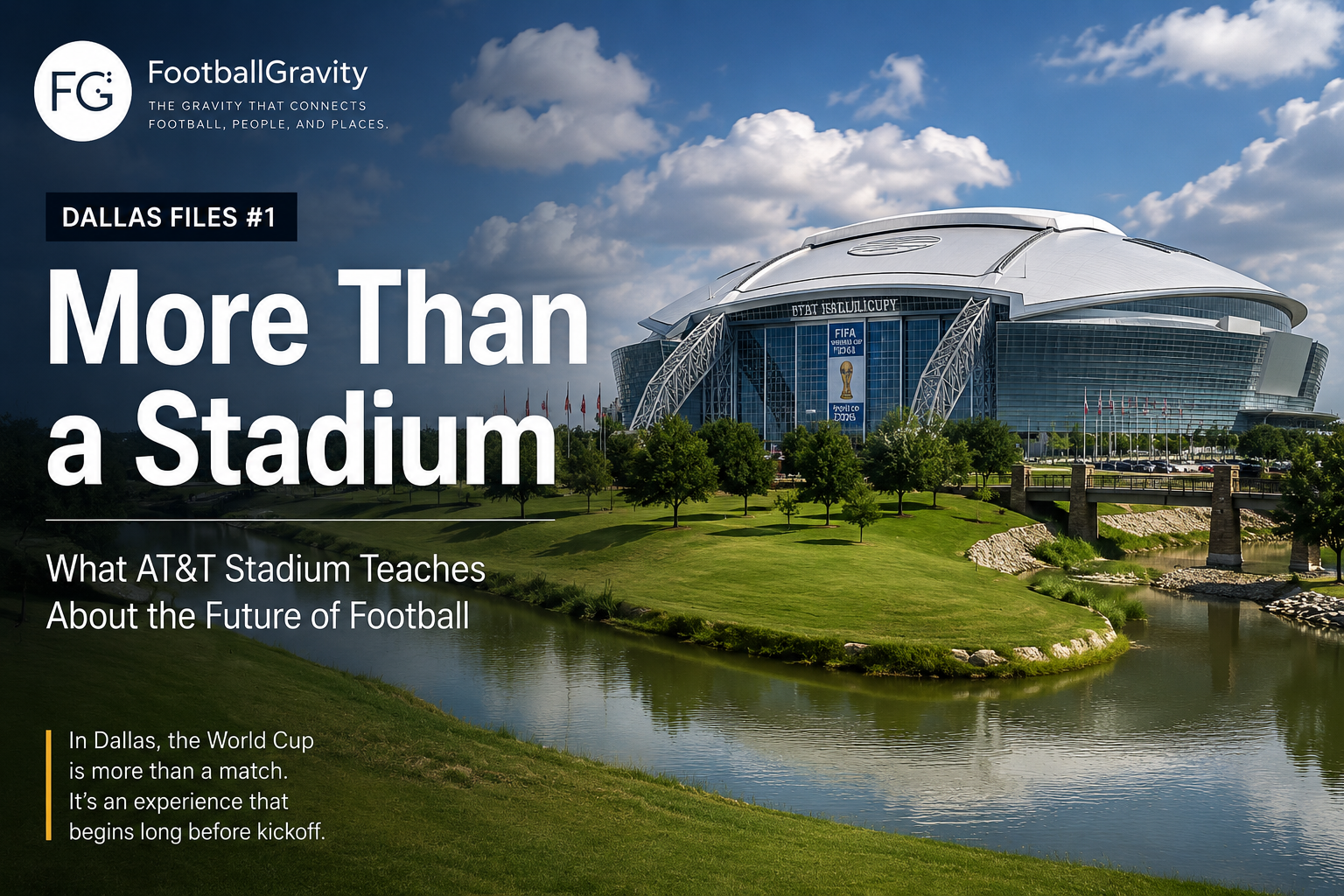
Instead of surrounding visitors with endless parking lots and concrete roads, the stadium opens into something unexpected.
Wide green spaces.
Walking paths.
Small waterways.
Trees.
Open lawns where families gather and supporters relax before kickoff.
It feels less like approaching a sports venue and more like arriving at a public park.
Supporters naturally slow down.
They walk.
They sit.
They talk.
The World Cup begins well before the referee blows the whistle.
A Festival Rather Than an Entrance
Beyond the security gates, the atmosphere changes again.
Food trucks.
Music.
Outdoor seating.
Large grassy areas.
Fans from different countries eating together under the Texas sun.
Children kicking footballs.
Groups taking photos.
Rather than simply waiting for kickoff, people spend hours enjoying the place itself.
The stadium is not merely a destination.
It is an all-day festival.
That distinction matters.
Great tournaments are remembered not only for ninety minutes of football, but for the experiences surrounding those ninety minutes.
AT&T Stadium understands this perfectly.
Designed Around the Spectator
Inside, the architecture continues to impress.
The most iconic feature is the enormous centre-hung video board, manufactured by Mitsubishi Electric.
Unlike traditional stadiums, where replay screens sit high behind one goal, this display hangs directly above the centre circle.
The difference is surprisingly significant.
Supporters never need to turn completely away from the pitch.
The action, the replays and the atmosphere remain connected.
Rather than interrupting the match experience, the technology becomes part of it.
Combined with the stadium’s powerful sound system, the effect is closer to a live concert than a conventional football match.
Every goal celebration feels immersive.
Every pre-match sequence feels cinematic.
It is entertainment without sacrificing football itself.
Small Details That Matter
The stadium’s scale is extraordinary, yet movement inside rarely feels stressful.
Restrooms remained remarkably accessible.
Food and drink outlets were distributed throughout the concourses.
Even with tens of thousands of spectators, congestion was surprisingly limited.
These details rarely appear in highlight videos.
Yet they shape the overall experience just as much as the match itself.
The best stadiums succeed because thousands of small design decisions quietly disappear into the background.
More Than Home Advantage
For Japan, there may also be a competitive benefit.
Playing two Group F matches in the same stadium means familiarity.
The climate is controlled beneath the roof.
Players become accustomed to the lighting, the pitch, the sightlines and even the rhythm of the venue.
These are subtle advantages, but tournament football is often decided by subtle margins.
A Stadium That Belongs to the City
AT&T Stadium is frequently described as one of the world’s greatest sporting venues.
After spending an entire day there, that reputation feels deserved.
What impressed me most was not its size.
It was the way architecture, public space, football and everyday life blended into one continuous experience.
Many stadiums host matches.
Few become part of the city itself.
Perhaps the future of football is not simply about building bigger stadiums.
Perhaps it is about building better places.
And AT&T Stadium offers a compelling blueprint for what that future might look like.