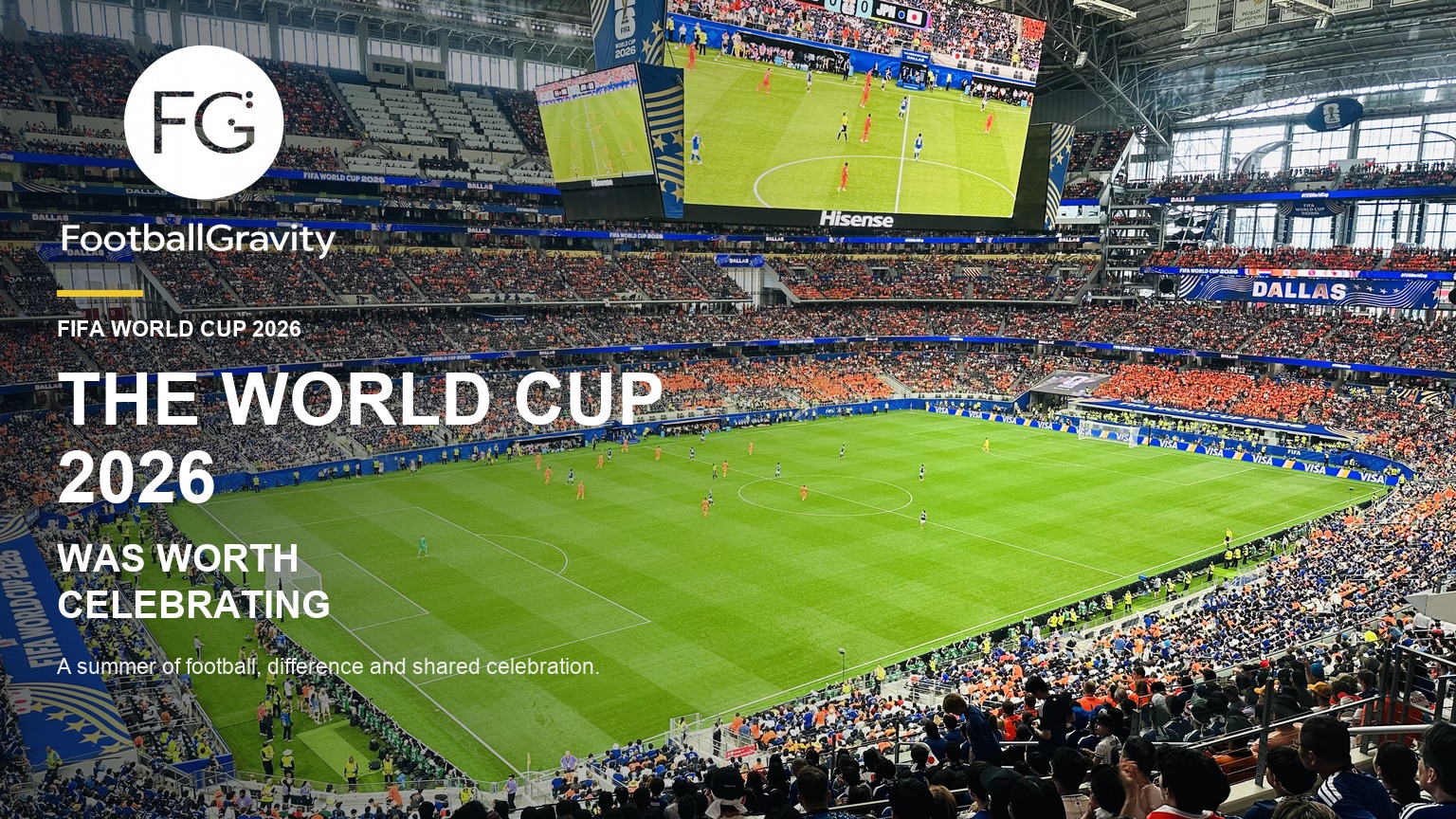
For all the arguments that followed it, the 2026 World Cup left a simpler memory for those who were there: an enormous, varied and unusually generous sporting celebration.
Now that the noise around the 2026 World Cup has settled a little, it is tempting to remember the tournament through its disputes. There were valid questions about prices, travel, heat, the expanded format and the way football is packaged for television. A World Cup that spread 104 matches across three countries and 16 host cities was always going to ask a lot of players and supporters.
But a tournament should also be judged by the experience it gave to the people who entered it. In stadiums, on streets and in the long stretches between one city and the next, this one often felt magnificent. It made room for many different versions of football culture at once. It gave supporters a reason to travel a long way, spend real money and give up precious time—not because there was nothing else to do, but because being there offered something that a highlights clip cannot.
The World Cup is often called the world’s greatest festival. From a distance, that can sound like a slogan. On the ground, it is a useful description.
A continent-sized stage
FIFA’s first 48-team men’s World Cup was also its largest: 104 matches, staged across Canada, Mexico and the United States. The distances were real. So was the summer heat. Neither should be romanticised away.
Yet North America’s scale was not only a logistical problem. It was part of the tournament’s character. The United States in particular contains cities that feel markedly different from one another: their stadiums, climate, transport habits, music, food and local sporting rituals all change as you move across the map. The World Cup did not ask those places to become identical. It let the tournament pass through them.
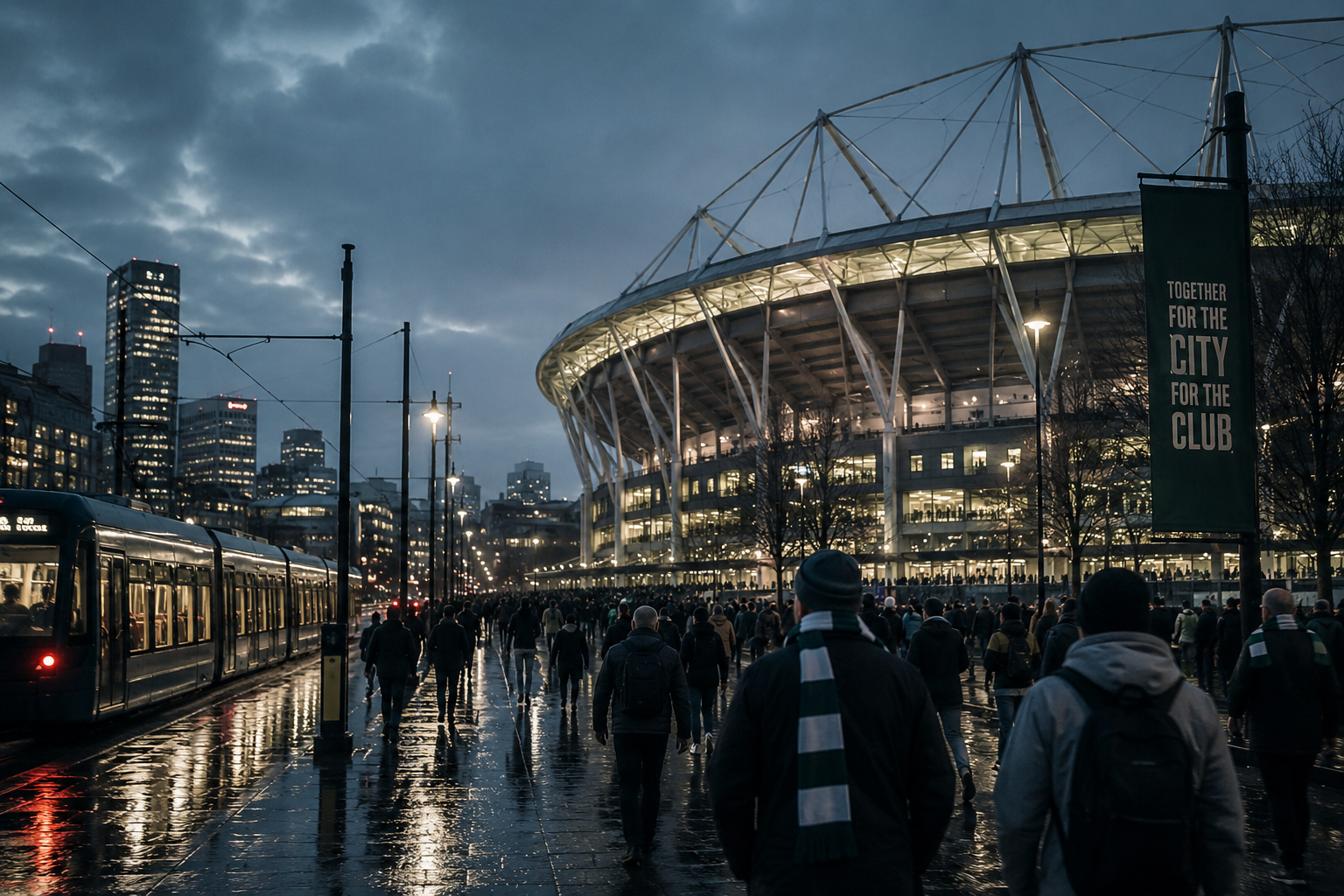
That mattered because this was not a small, self-contained event. It was an arrival point for people from everywhere. To receive that many visiting supporters safely, keep them moving, fill large venues and still make the day feel festive is a serious achievement of planning and civic infrastructure. The host cities had the physical capacity, but just as importantly they had a familiar instinct for treating a sporting occasion as a shared public event.
At the matches I attended, that instinct was visible before the opening whistle. Music was chosen to speak to the teams and the crowd. Big screens and in-stadium hosts built anticipation without asking supporters to sit silently until the football began. In some venues, local cheer squads brought the grammar of American game day into a World Cup setting. It did not replace football culture. It added another layer to it.
A mass singalong can look frivolous on a broadcast, but it changes a stadium from a collection of ticket holders into a temporary community. A song such as Bon Jovi’s Livin’ on a Prayer, sung by tens of thousands of people who arrived wearing different flags, has a very simple appeal. The same was true when Queen or Oasis filled the pauses around a match. For a few minutes, the competition did not disappear; it became easier to share.
More colours in the stands
The expansion from 32 to 48 teams brought familiar objections. More places can produce uneven group matches. The value of a single goal can feel different in a larger competition, and the draw carries more weight when the path is longer and more complicated. Those are reasonable football questions.
They are not the whole story. More teams also meant more songs, clothes, languages, rituals and football memories in the same places. Mexico’s support did not need an introduction, but the energy around Mexican matches and fan spaces still gave the tournament a pulse that no broadcast graphic could measure. Norway’s supporters, with their synchronized Viking Row, offered another kind of theatre: playful, specific and instantly recognisable. FIFA itself highlighted the tradition alongside French supporters’ clapping as an example of the fan cultures meeting during the tournament.
What stayed with me was not a sentimental idea that every supporter was the same. The pleasure came from the opposite. People brought different ways of showing affection for a team, and those differences made everyone else more aware of their own colours. A supporter can see another country’s style, admire it, laugh with it and then sing a little more loudly for home. Difference did not weaken identity. It gave identity an audience.
Club football has its own cosmopolitan beauty, but the globalised transfer market has made many squads resemble one another. National teams remain imperfect representatives of a country, of course. Still, the World Cup lets a wider range of local accents appear in public: not only in the players, but in the people who travel with them. The 2026 edition made that visible at a scale the tournament had not previously reached.
The pauses were part of the day
The mandatory hydration breaks became one of the tournament’s most argued-over innovations. Critics were right to notice that a three-minute pause can affect rhythm, tactics and the old expectation of two uninterrupted 45-minute halves. The heat risk was also genuine: FIFA introduced the breaks throughout the tournament as a player-welfare measure.
From a seat in the stadium, though, the pauses had another effect. They gave people time to drink water, find a restroom, settle a child, look around and return their attention to the pitch. The match did not necessarily become less intense; it acquired a different tempo. Rather than one long, unbroken demand on the audience, it had several distinct movements.
That will not persuade every traditionalist, and it need not. Football should be careful about changing its basic rhythm. But the World Cup is also a live event for a huge and varied public, many of whom are attending a match of this size for the first time. Making the stadium easier to inhabit is not automatically a betrayal of the game. In this case, it often felt like hospitality.
A difficult thing, done with ambition
It is possible to hold two thoughts at once. The 2026 World Cup was expensive, exhausting to follow across long distances and open to serious criticism in parts of its design. It was also an extraordinary piece of sports entertainment, staged with ambition and received with enthusiasm by many of the people who made the journey.
That distinction matters. The fact that a supporter has spent heavily to be there does not make the experience shallow. People with choices about where to spend their time and money still chose this tournament. They chose flights, queues, unfamiliar streets, stadium searches and the awkwardness of crossing a continent because the reward was rare: to be inside a gathering large enough to show the world to itself.
Online, the sharpest criticism usually travels fastest. It is easier to share a clip of a disputed decision or an argument about a rule than the quieter fact that strangers were enjoying a city together. In the stands and around them, I saw something different: supporters respecting other supporters, hosts taking pride in their city, and people treating a football match as a reason to be generous with one another.
That is not an argument for ignoring the tournament’s flaws. It is an argument for keeping the scale of the experience in view. The 2026 World Cup did not have to be perfect to be worth celebrating. It gave football an enormous stage, filled it with more of the world than ever before, and for a summer made the differences between us feel less like a problem than a reason to gather.