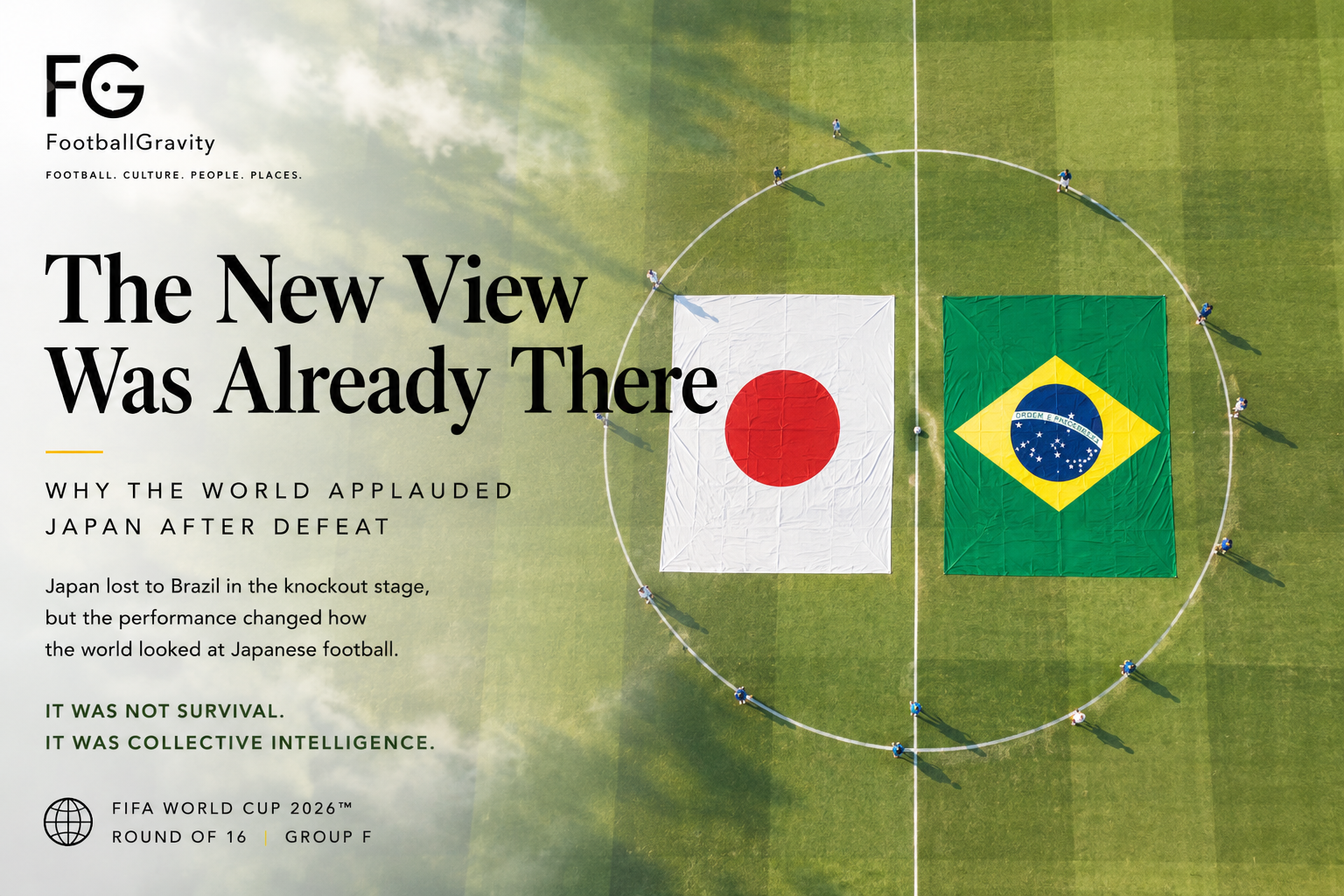
Why the world applauded Japan after defeat
Japan lost.
That is the simplest sentence.
Brazil advanced. Japan went home. Another World Cup knockout match ended without Japan’s first victory beyond the group stage.
And yet, after the final whistle, the conversation did not feel like a simple story of failure.
Around the world, Japan were not spoken of merely as brave losers. They were discussed as a team that had shown something rare: a national side capable of making Brazil look human, not through luck, not through chaos, but through collective intelligence.
That may be why this defeat felt different.
For years, Hajime Moriyasu had spoken about “a new view.”
Perhaps many imagined that view would mean a quarter-final, a semi-final, or even something more ambitious.
Those results did not arrive.
But against Brazil, something else did.
The football world saw Japan differently.
The Cruelest Path
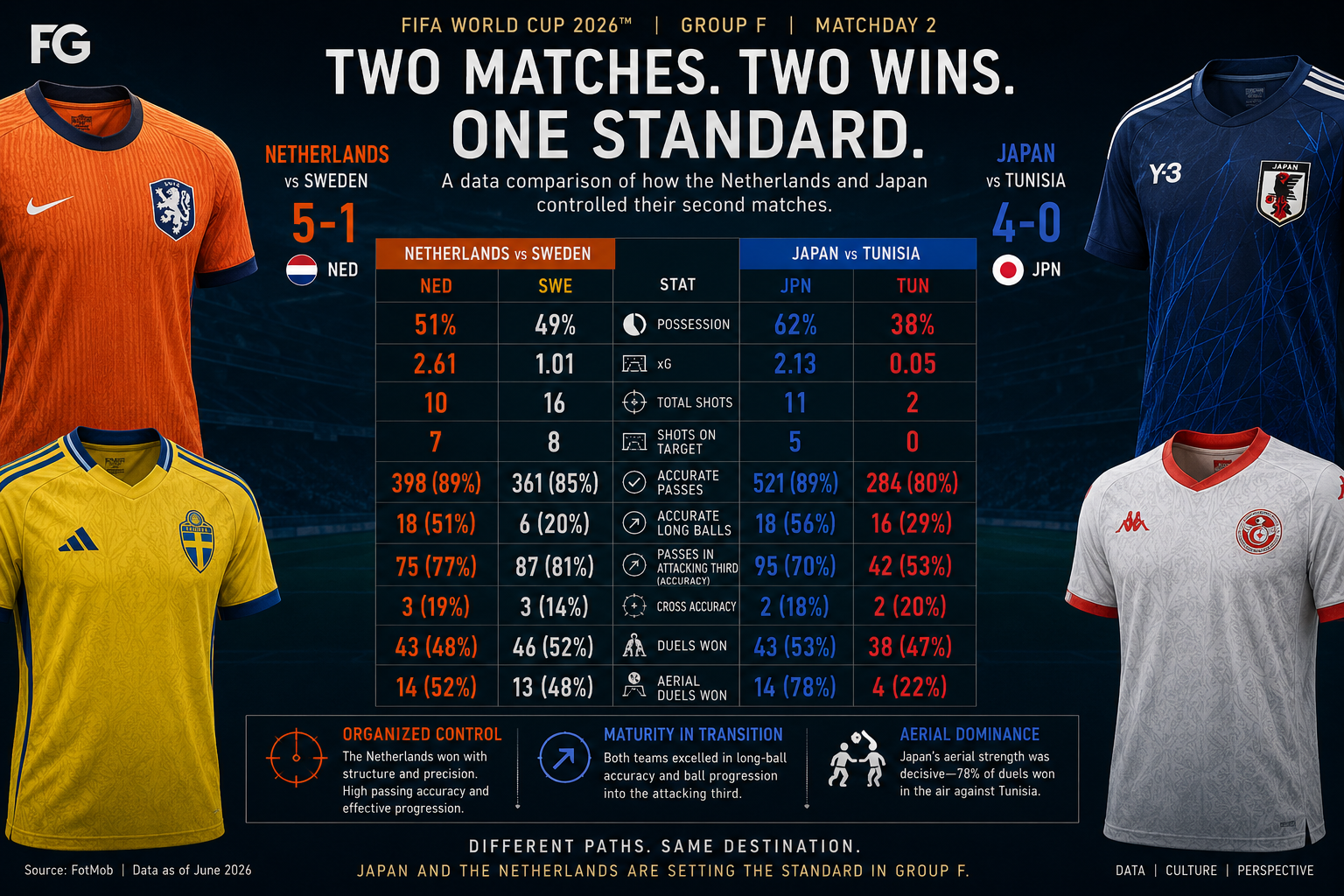
The first knockout round was especially unforgiving for Group F.
Japan faced Brazil.
The Netherlands faced Morocco.
Sweden faced France.
All three teams that advanced from Group F were eliminated.
That does not erase their defeats. But it does change the frame.
Japan did not fall against an ordinary opponent. The Netherlands were pushed out by a Morocco side that looked like one of the most complete teams in the tournament. Sweden were beaten by France, a side whose individual quality and tournament experience remain among the highest in world football.
Group F had produced competitive teams.
But the next path was brutal.
Japan’s loss belonged to that context.
And still, among the three defeated sides, Japan seemed to leave the strongest impression.
Why?
It Was Never Only About the Result
Football usually remembers winners.
Paraguay, for example, achieved something Japan could not: they took Germany to penalties and won. That deserves full respect.
But global admiration does not always follow the scoreboard alone.
Japan were praised because of how they played.
They did not appear to be a team simply waiting for Brazil to make a mistake.
They did not defend as if survival was the only plan.
They defended as if defending itself could be a way of attacking.
That distinction matters.
Japan were not trying only to reach penalties.
They were trying to win.
Against Brazil.
The Mystery the World Wanted to Solve
Japan are no longer an unknown football nation.
The old assumption that European or South American teams could underestimate Japan no longer works.
This is the country that beat Germany and Spain in Qatar. The country that later defeated Germany again. The country that has shown, repeatedly, that its best football belongs on the same pitch as elite opposition.
The question has changed.
It is no longer:
Can Japan compete?
It is now:
Why have Japan become so difficult to play against?
Against Brazil, the answer became clearer.
It was not only technique.
It was not only discipline.
It was synchronisation.
Eleven Players, One Organism
International football usually favours individual quality.
National teams do not train together like clubs. They do not have months to build mechanisms, pressing traps, defensive distances, or shared habits.
That is why knockout football often belongs to individual brilliance.
A winger beats a defender.
A striker finds half a yard.
A midfielder breaks the structure with one pass.
Japan proposed another answer.
Collective movement.
The back line moved together.
The midfield moved together.
The wing-backs adjusted together.
Even the forwards defended as part of the same structure.
At times, Japan looked less like eleven separate players and more like one organism responding to the ball, the space and the opponent at the same time.
That is rare in international football.
And that is what many observers seemed to recognise.
Brazil Did Not Become Ordinary
There is a danger in misreading the match.
Brazil did not suddenly become ordinary.
Japan simply prevented Brazil from looking extraordinary.
That may be the greatest compliment a defensive structure can receive.
The best attacking teams usually make opponents look reactive. They stretch the pitch, isolate defenders, and create the impression that danger can appear from anywhere.
Against Japan, Brazil were forced to think.
They had to adjust.
They had to suffer.
They had to wait until the final moments.
That was not because Brazil lacked quality.
It was because Japan denied them rhythm.
Not Defensive Football, But Winning Football
Japan’s structure was defensive in shape, but not defensive in spirit.
There is a difference between protecting a score and refusing to play.
Japan did not simply sit low and hope.
They pressed.
They shifted.
They tried to create moments.
They looked for the chance that would turn control into shock.
This is why the performance felt attractive, even without attacking fluency.
Japan’s injuries mattered. Several important attacking options were missing or limited. The final combinations were not always clean.
But the intention was visible.
This was not football designed only to avoid defeat.
It was football designed to find a path to victory against a superior collection of individual talent.
That is why it resonated.
Why Coaches Understand It
Some performances are appreciated first by fans.
Others are understood most deeply by coaches, former players and analysts.
Japan’s performance belonged to the second category.
Anyone can admire a dribble.
Anyone can celebrate a goal.
But collective coordination is harder to see.
It requires watching distances, timing, cover, body orientation and the relationship between players who may never touch the ball.
Against Brazil, Japan showed that a national team can still build something close to club-level collective behaviour.
That is not easy.
It is not accidental.
And it is not simply “hard work.”
It is design.
A New View
Moriyasu’s phrase, “a new view,” will always carry the sadness of unfinished ambition.
Japan wanted more.
The players wanted more.
The supporters wanted more.
A first knockout victory was close enough to touch, and then gone.
But perhaps the phrase does not belong only to the result.
Perhaps a new view can also be the moment when the world looks at Japanese football and no longer sees an outsider.
Not a surprise.
Not a guest.
Not a romantic underdog.
But a serious football nation with its own method, its own intelligence, and its own way of making the game difficult for anyone.
The players saw it.
The coach saw it.
The supporters felt it.
And perhaps, for the first time, the world saw it too.
The new view was already there.