
On 15 October 2026, the pitches at Coverciano, the Italian Football Federation’s training centre near Florence, hosted 22 teams with a common purpose. Latvia defeated the Republic of Ireland 2–1 in the final of the fifth Unity EURO Cup. But the final score tells only a small part of what brought the players together.
Organised by UEFA in partnership with UNHCR, the UN Refugee Agency, the tournament brings refugees and people from their host communities onto the same teams. It offers a day of competition and, more importantly, a setting in which people can meet as teammates.
The teammates make the tournament
The seven-a-side tournament has an unusual squad rule: each eleven-player squad includes seven refugees and four players from host communities, with at least three women among the players. The mix is part of the design. On the pitch, participants need to make decisions together, support one another and share the small rituals familiar to any football team.
The 2026 event was the largest edition yet, with 22 teams, four more than the previous year. Italy hosted for the first time. Winning still mattered: Latvia celebrated a hard-fought final. Yet no team needed to win a trophy to experience the value of training and competing with new people.
A European context
Across Europe, communities bring together people with different languages, cultural backgrounds and experiences of moving to a new country. Welcoming newcomers, including refugees, is part of everyday life in many towns and cities. Getting to know neighbours and finding shared interests are small but meaningful parts of making a home in a new place.
In places where playing and watching football are already part of local life, a neighbourhood pitch offers a familiar setting for those encounters. Newcomers and long-time residents can join in the same activity and get to know one another through the game.
A federation’s work beyond the national team
National football federations are usually judged by the fortunes of their senior teams and the decisions of their leaders. Italy’s FIGC has faced criticism over sporting results, but its responsibilities and contributions extend well beyond them.
The federation has run RETE! Refugee Teams since 2015. Across its first ten editions, FIGC reports 11,613 young participants and 1,027 reception centres involved. Its 2026 programme included 784 players, 91 reception centres and 29 partner sports clubs. That sustained local work gives the international tournament roots in communities across Italy.
FIGC also places refugee support within its sustainability commitments. For a federation whose public image is so often shaped by a result on the pitch, this quieter and sustained investment deserves recognition.
From playing to helping others play
Mahmoud Ali offers a personal example of the connections football can bring. In UEFA’s account of his experience, he describes finding friendship through the Berlin organisation Champions ohne Grenzen. He later gained coaching qualifications, coached children and joined the organisation’s board. Ahead of the 2026 Unity EURO Cup, he was invited to represent Germany.
Coaching also became a way to learn together. As Mahmoud helped children develop their football, they helped him with the language. His experience gives a human shape to the idea of a team: people bringing what they know, learning from each other and enjoying a shared activity.
For local clubs and community organisations, regular sessions offer more occasions to meet, play and welcome someone new. Over time, a familiar face at training may become a friend, a volunteer or a coach. Each person can take part in their own way.
The simple joy of playing together
There is something remarkably direct about football. You do not need to share a first language to recognise a pass, offer a teammate an option or celebrate a goal. A gesture or a well-timed run can start a conversation that words have yet to begin.
Teammates who might otherwise never meet can spend an afternoon chasing the same ball, helping each other after mistakes and laughing during a break. The pleasures are ordinary, and that is their strength. Refugees taking part bring their own ambitions, skills and enthusiasm as footballers and teammates.
Victory adds excitement to the day. So do a good pass, a teammate’s encouragement and the laughter after a missed chance. Whatever the score, those shared moments are part of the pleasure of being a team.
Beyond the final whistle
An afternoon of football can matter simply because someone enjoys being there. Feeling at ease with teammates, being included in the play or sharing a laugh can make that day a little brighter. That is a worthwhile reason to bring people together.
The Unity EURO Cup makes room for that possibility, with people from different backgrounds sharing the rules, movement and excitement of a game. FIGC’s continuing work through RETE! creates further opportunities to come together in everyday community life.
Latvia left Coverciano with the trophy. Alongside the result, there is another reason to value a day like this: the chance to go home thinking, “I enjoyed playing with them today.” Sometimes, a sense of belonging begins with something that simple.
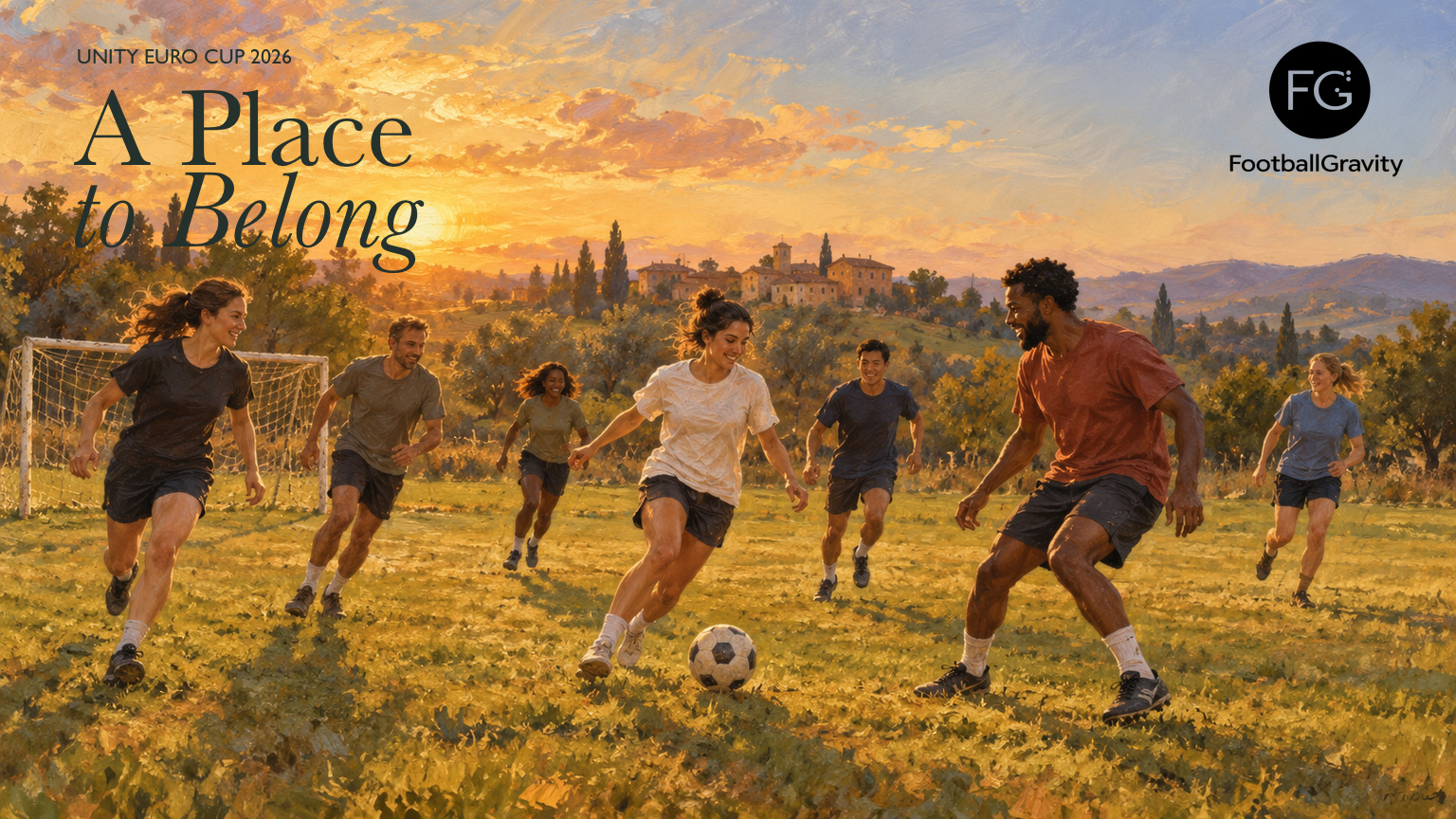
Featured illustration: AI-generated artwork of an imagined football game, with the official FootballGravity logo added separately. It does not depict the Unity EURO Cup or its participants.